
fashionette Checkout Optimization
Rethinking the checkout: removing a mandatory registration requirement more than doubled checkout conversion — from 1.3% to 2.7%, with peaks above 10% during holiday periods.
Client
fashionette
Industry
fashion
Timeline
Technologies

Summary
Rethinking the checkout: removing a mandatory registration requirement more than doubled checkout conversion — from 1.3% to 2.7%, with peaks above 10% during holiday periods.
Context
Role: UX Designer Client: fashionette Scope: Checkout flow, payment methods, delivery communication, stakeholder alignment
Challenge
The checkout had a conversion rate of just 1.3%. At the root of the problem was a deliberate management decision: customers were required to register an account before they could complete a purchase. The reasoning was security-driven — management believed a mandatory registration would act as a deterrent against fraud and keep the business on the "safe side."
In practice, this assumption didn't hold up. Fraudsters typically have access to plenty of fake email addresses, so a registration requirement did little to stop them. For the vast majority of genuine customers, however, it created a significant barrier — particularly for first-time buyers who were reluctant to create an account before they'd had any experience with the shop. The measure barely protected against the risk it was meant to address, while costing conversion among the very customers the business relied on.
Process
Conducted user testing to gather real customer opinions and behavior around the checkout flow
Used the findings to build a case with management, showing that a small percentage of fraudulent guest orders shouldn't come at the expense of the much larger group of honest buyers
Took management's security concerns seriously rather than dismissing them — the goal was a workable consensus, not a one-sided decision
Extended the same user research to identify further friction points in the checkout beyond the registration issue
Solution
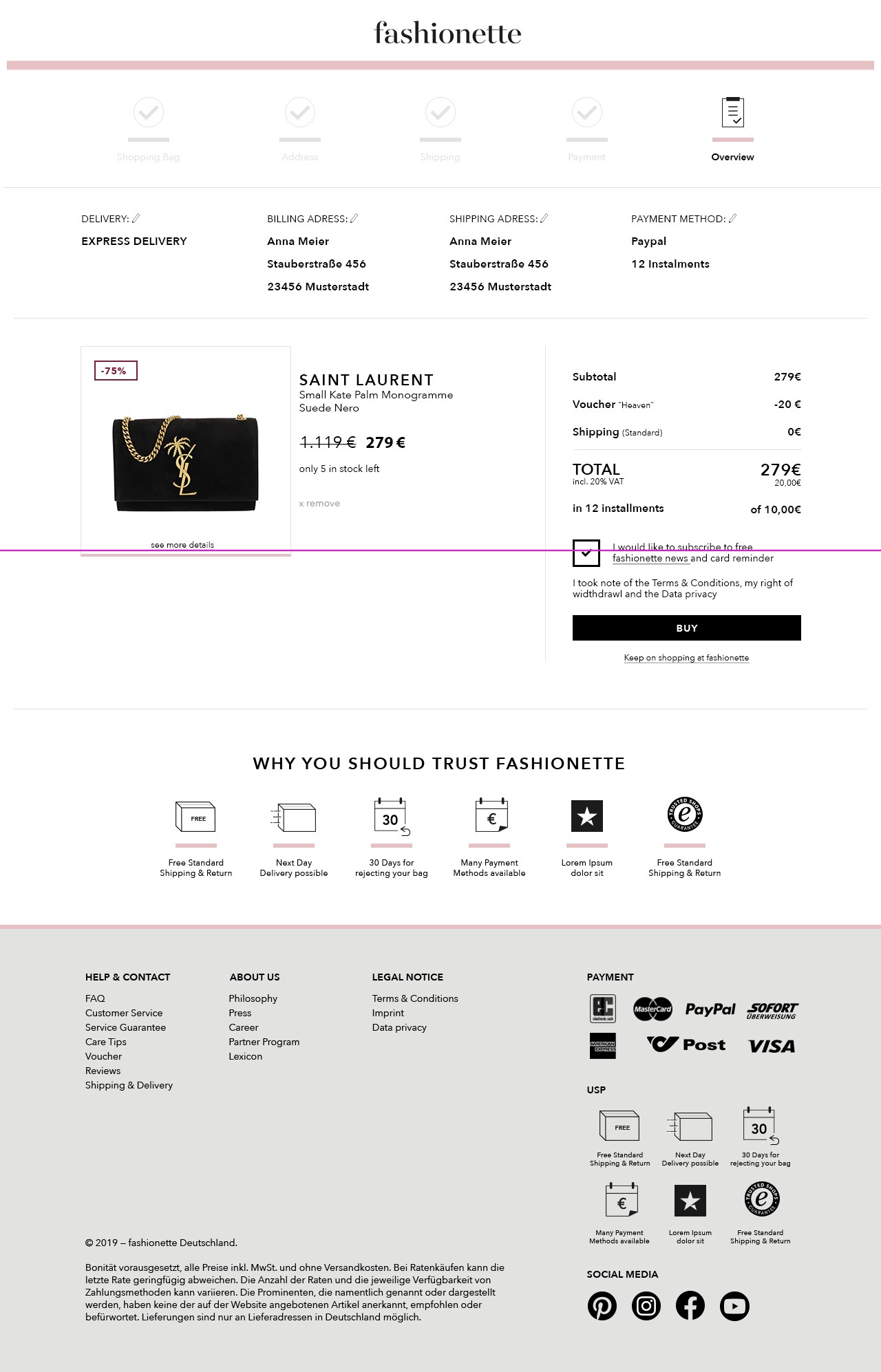
Enabled guest checkout, removing the core barrier to purchase
As a security trade-off, guest orders were limited to secure payment methods (Mastercard, Visa, PayPal), while higher-risk options like invoice purchase and installment payments remained reserved for registered accounts
Explained why the phone number was required at the point it was requested, instead of asking for it without context
Made the differences between delivery options clearer and more distinct, so customers could make an informed choice at a glance
Reduced the number of steps and actions required to complete checkout, shortening the path to purchase
Result
Metric | Before | After |
|---|---|---|
Checkout Conversion Rate | 1.3% | 2.7% |
Checkout Conversion Rate (holiday peaks) | 1.3% | 10%+ |
Learnings
The biggest lever wasn't a visual or interaction redesign — it was challenging a long-standing internal assumption about security with real user data, and turning a defensive stakeholder conversation into a shared, workable compromise.


More Project
</
>

